Wisdom is Weaponry
Support Chanakya Forum. Fuel the mission
“Respect, fairness, reciprocity”: Xi, Trump agreed to build constructive China-US relationship, says Chinese FM Wang Yi
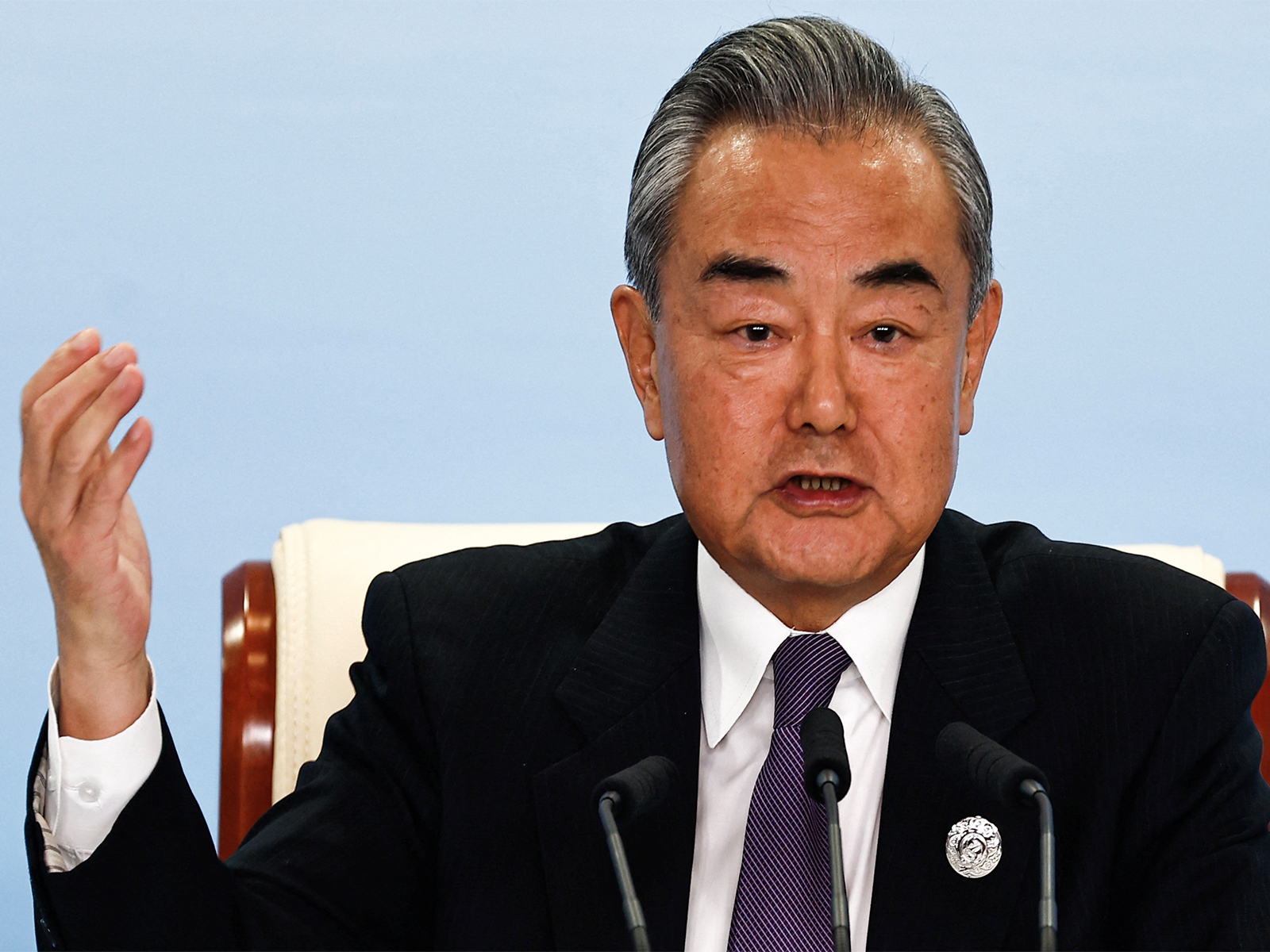
Beijing [China], September 28 (ANI): Chinese President Xi Jinping and US President Donald Trump have agreed to build a constructive China-US relationship of strategic stability based on respect, fairness and reciprocity, Chinese Foreign Minister Wang Yi said following Xi's state visit to the United States.
Wang Yi told Chinese state media, “An important political outcome of President Xi Jinping's state visit to the US is that President Xi and President Trump have agreed to build a constructive China-US relationship of strategic stability based on respect, fairness and reciprocity.”
Wang Yi said respect means “respecting each other's sovereignty and territorial integrity, respecting each country's choice of social system and development path, and respecting the other side's core interests and major concerns.”
Explaining the principle of fairness, Wang Yi said, “Fairness means pursuing mutually beneficial cooperation and handling differences through consultation, rejecting a zero-sum game in which one side's gain comes at the expense of the other's, and not seeking unilateral absolute advantage.”
On reciprocity, Wang Yi said, “Reciprocity means that the two countries are equal in sovereignty, that neither side stands above the other, that neither engages in hegemonic nor bullying behaviour, that each side's concerns are addressed on an equal basis, and that cooperation across various fields develops in a balanced manner.”
According to Xinhua, Wang Yi made the remarks while briefing reporters on Xi's state visit to the United States from September 23 to 25. He said Xi and Trump had a “candid and in-depth exchange of views in a friendly atmosphere of mutual respect” on strategic and overarching issues concerning China-US relations and the broader global landscape.
Wang Yi said that since Trump began his second term, the two leaders had maintained close exchanges, including three in-person meetings and five phone talks, fostering a pattern of interaction marked by “mutual respect and sincerity”, which he called “the most valuable strategic asset in China-US relations.”
On economic and trade relations, Wang Yi said Xi had pointed out that a stable China-US economic and trade relationship requires both expanding the list of cooperation and shortening the list of problems. He said the US should treat Chinese companies fairly, resolve problems through dialogue and negotiations, and promote the sustained, stable and positive development of bilateral economic and trade relations.
On the fentanyl issue, Wang Yi said the abuse problem in the US was not caused by China, but added that China had “always acted with the utmost goodwill and made every effort to assist the US side in addressing the fentanyl crisis.” He said the two leaders had tasked the law enforcement agencies of both countries with continuing to strengthen cooperation and jointly combat transnational crime.
Wang Yi also said Xi had announced measures to promote people-to-people exchanges, including inviting 100,000 young Americans to visit China for exchange and study programmes over the next five years. He added that two pandas, Ping Ping and Fu Shuang, would soon arrive at Zoo Atlanta.
On international and regional issues, Wang Yi said the two leaders had agreed to strengthen coordination and contribute to world peace and development. He said Xi encouraged relevant parties to remain committed to peace and supported the United States and Iran in returning to the Islamabad Memorandum of Understanding, resuming dialogue and negotiations at an early date, and ultimately reaching a comprehensive agreement covering the nuclear issue.
On artificial intelligence, Wang Yi said Xi and Trump agreed that the two countries should “leverage respective strengths rather than guard against each other” and make good use of AI dialogue mechanisms while jointly preventing the misuse and abuse of AI.
Wang Yi also said China and the United States, as permanent members of the UN Security Council, share responsibility for upholding the postwar international order and preventing the resurgence of militarism.
He added that China and the United States will respectively host the APEC Economic Leaders' Meeting and the G20 Leaders' Summit in the fourth quarter of this year, with the two leaders confirming mutual support that would continue to contribute to cooperation in the Asia-Pacific and global governance.
His remarks come as the United States and China agreed on more favourable tariff treatment for USD 30 billion of non-sensitive goods in each direction and established a new dialogue on emerging technologies during Chinese President Xi Jinping's three-day summit with US President Donald Trump, according to a White House fact sheet.
This comes as earlier in September TASS reported that Russian President Vladimir Putin may meet his US counterpart Donald Trump on the sidelines of the Asia-Pacific Economic Cooperation (APEC) summit in China if an opportunity arises, while Moscow also said a trilateral meeting involving the leaders of Russia, China and the United States cannot be ruled out. (ANI)